Sunday, April 26, 2020

Bach Prelude and Fugue No. 4 in C sharp minor, BWV 849

Relative to San Francisco, it's very quiet here in Fairview, Wyoming, especially in the early spring, as the aspens don't yet have leaves to rustle in the wind, and the forest birds are just arriving from their winter sojourn. There were no jets flying over the valley this afternoon, and I heard no coyotes—they only howl at night.  However, I did hear Peanut snoring again.

Amidst this mostly quiet afternoon, and following recordings of the Prelude and Fugue No. 18 in G sharp minor from Bach's Well Tempered Clavier Book 1, I worked on Bach's Prelude and Fugue No. 4 in C sharp minor, also from Book 1.  I love the Prelude, so lyrical and inquisitive.  A real gem.  The Fugue is a tough—one of the more complex pieces I've studied.  I imagine it will take time to truly understand the piece, all of the lines, the five voices in counterpoint, the masterfully developed and contrasting subjects, creating the fugue's austere, tender, yet tormented character.  It continues to grow on me.


We always learned in music theory class that you should prepare a dissonant note or chord, perhaps with a suspension, thoughtful voice leading, passing tones, etc.  Yet Bach, despite being the reference standard for tonal music theory, doesn't seem to care for such rules and uses unprepared dissonance throughout this fugue, starting with the second note of the subject—B-sharp, the leading tone, which doesn't resolve to the tonic.  True to form, as we encounter the final cadence in bar 112, following a big dominant chord, we get a jarring and once again unprepared dissonant chord.  

While Bach often uses the Picardy third to end a minor piece in the major key, here he introduces the E-sharp four bars early in a deceptive cadence, an augmented A-major chord (VI7+), first inversion.  Not expected.  When you look at Bach vertically, to me his music often seems more dissonant than, say, that of Ives.  Yet typically, within the context and horizontal flow of the piece, nothing sounds dissonant, as Bach manages to take our ears to many foreign lands that don't seem so foreign.  But not this time.

Here is the prelude, followed by the fugue.


Prelude No. 4 in C sharp minor


Fugue No. 4 in C sharp minor

Wednesday, April 15, 2020

Bach Prelude & Fugue No.18 Book 1 WTC in G sharp minor BWV 863

While sheltering in place here in Fairview, Wyoming, I recorded the Prelude and Fugue in g-sharp minor, no. 18 from J.S. Bach's Well Tempered Clavier, Book I.


It's been such a difficult month -- my heart goes out to all those who are suffering or are sacrificing for the rest of us.  I can only imagine what it must be like to be working in the ER in NYC or in a distribution center or as a grocery clerk.  I feel very thankful for all of these people.

I'm also thankful that we can turn to music at such times.  I see so many people singing around the world on Smule.  It warms my heart.

I recorded the prelude and fugue on a Yamaha S400 piano.  It's soft and seems to work well for Bach.  I've actually been playing a lot lately, including quite a bit of Brahms.  I'm just trying to find the time to sit down, breath, and record.  The iPhone mic isn't great but will have to do.  Stay safe everyone.


Sunday, January 07, 2018

Chorale No. 5

Remembering my father, again, I was reflecting with a close friend today on music I wrote years ago, including this piece, set to Psalm No. 6.  The piece was both dedicated and directed to my mother.  I'm not certain she cares for the piece as much as I do.

Here are the score and a piano recording of the chorale, which I just recorded tonight.

Chorale No. 5 (score)
Chorale No. 5 (piano)

I also include the text to Psalm No. 6.  The music is set to only the first six lines of the Psalm, which possibly makes some sense (or not) when you consider the change in tone and perspective of the Psalm after the sixth line.

Lord, rebuke me not in thine anger, neither chasten me in thy hot displeasure.
Have mercy upon me, O Lord; for I am weak: O Lord, heal me; for my bones are vexed.
My soul is also sore vexed: but thou, O Lord, how long?
Return, O Lord, deliver my soul: oh save me for thy mercies' sake.
For in death there is no remembrance of thee: in the grave who shall give thee thanks?
I am weary with my groaning; all the night make I my bed to swim; I water my couch with my tears.
Mine eye is consumed because of grief; it waxeth old because of all mine enemies.
Depart from me, all ye workers of iniquity; for the Lord hath heard the voice of my weeping.
The Lord hath heard my supplication; the Lord will receive my prayer.
10 Let all mine enemies be ashamed and sore vexed: let them return and be ashamed suddenly.

Sunday, December 17, 2017

Adagio Cantabile from Beethoven Sonata Op. 13 in C minor, “Pathetique”

After spending more time with Brahms and Bach this past year, I'm coming back to the early Beethoven sonatas, including Op. 7, Op. 10 No. 2, Op. 14 No. 2, as well as this treasure. I was probably inspired by my friend Andrew Rangell's new CD, a Bouquet of Beethoven.  BTW, do we still call them CDs?


I spent some time on this piece this week.  I didn't realize how fast I was playing until I listened to the recording.  Hardly an Adagio, it's difficult to "sing" at this tempo, but unfortunately, so is life for me.  I've been trying to slow down for the past few decades and haven't yet succeeded.  I dream of not rushing one day—while playing Beethoven, while walking to Caltrain, while spending time with my children...

When I think about the frenetic pace of my life, I'm reminded of the time in 2005 when I stepped down from job/career and focused on composing full time.  One of the first pieces I wrote, before formally beginning my graduate studies at Stanford, was an orchestral set based on Dante's Purgatorio, which allowed me to explore this theme of life and time.  Lacking an orchestra, I used Cubase and "virtual instruments" to create recordings, which didn't seem so awful back then (oh my, was I wrong, so much so that I began to abandon writing orchestral pieces in favor of piano pieces that I could learn and play myself).  Here are a couple pieces from that set, including "Calliope Arise" and "Femmina Balba II", which I more or less improvised on a keyboard that was plugged into Cubase to synthesize two cellos.
The Divine Comedy, Purgatorio, I, 1:12
Per correr miglior acque alza le vele1To run its course through smoother water
omai la navicella del mio ingegno,2the small bark of my wit now hoists its sail,
che lascia dietro a sé mar sì crudele;3leaving that cruel sea behind.
e canterò di quel secondo regno4Now I shall sing the second kingdom,
dove l'umano spirito si purga5there where the soul of man is cleansed,
e di salire al ciel diventa degno.6made worthy to ascend to heaven.
Ma qui la morta poesì resurga,7Here from the dead let poetry rise up,
o sante Muse, poi che vostro sono;8O sacred Muses, since I am yours.
e qui Calïopè alquanto surga,9Here let Calliope arise
seguitando il mio canto con quel suono10to accompany my song with those same chords
di cui le Piche misere sentiro11Whose force so struck the miserable magpies
lo colpo tal, che disperar perdono.12that, hearing it, they lost all hope of pardon.
The Divine Comedy, Purgatorio, XIX, 10:14
Io la mirava; e come 'l sol conforta10I looked at her, and as the sun revives
le fredde membra che la notte aggrava,11Cold limbs benumbed by night,
così lo sguardo mio le facea scorta12so my gaze gave her a ready tongue
la lingua, e poscia tutta la drizzava13And then in very little time
in poco d'ora, e lo smarrito volto,14straightened her crooked limbs

Saturday, July 15, 2017

Bach Goldberg Variation No. 13

The first thing I did when I arrived in Fairview, Wyoming today was to open the gate to the outer pasture, hopefully persuading the horses to come and visit so it will be easier to catch them tomorrow.

The second thing I did, after arriving, was play the piano. It's such a treat to be able to play while watching the wind blow through the quaking aspens as the sun is setting on "Big Ridge" to the west.

I think a lot about the sacrifices my ancestors made for me.  This land was my great-grandfather's, Robert Hillstead, an immigrant from England.  On the ridge of the mountain, nestled near the Bridger Nat'l forest, this "dry farm" (not irrigated) would support grazing the dairy cattle during the summer months.  My grandfather and his brothers would take turns making the trip to the ridge from the valley each evening.  They would round up the cows, milk them, spend a night in a little shack (quite near the corral in the photo), and then repeat the exercise for the morning milking the next day.  After, they would take the milk down to the valley and sell it.

I remember many summers here in Star Valley with my Grandpa Joe.  His heart never left this valley.  I think my heart will never leave Star Valley either.

Wednesday, June 07, 2017

Preludes No. 8 and No. 11

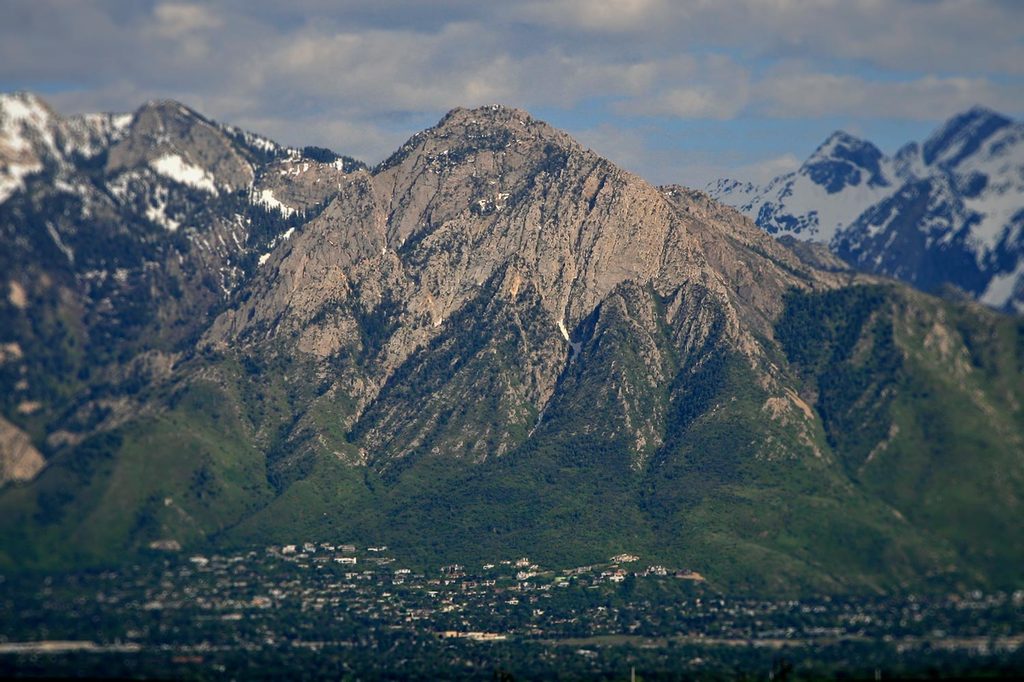
Today was a day of reflection. Seventeen years ago, or June 6th, 2000, my father passed away. One year prior, on the same day, my Grandma Smith, his mother, had passed away. They are buried next to each other, alongside his father and sister, in Holladay, Utah. From his grave, you have a perfect view of Mount Olympus in the Wasatch mountains, his favorite mountain peak.
I experienced every emotion that summer. At work, we were busy closing our quarter, our fourth as a public company. I was a week away from starting the road show for our secondary offering. In parallel with the secondary, we'd signed a term sheet to purchase another company and were commencing diligence. At home, my wife Tina and I had just purchased our second piano, a beautiful Bösendorfer from Austria (which I used for the recordings below). She was seven months pregnant with our first child, my son Noah. And then my father died.

I think of this summer often. When I see Mount Olympus, when I play some of my own pieces from that era, when I hold my son, when I hear and sing the hymns my father and I sang in church together. I wrote these pieces, Preludes no. 8 and no. 11, six years later, still reflecting. No. 11 is a variation of the hymn, Be Still my Soul, taken from Sibelius's Finlandia.

Prelude No. 8
Prelude No. 8 score

Prelude No. 11
Prelude No. 11 score

Monday, May 15, 2017

Brahms Ballade Op. 10 No. 1 in D Minor

I turned 50 on March 11 and hosted a piano recital for my birthday.  My program included Brahms Op. 9, the Schumann Variations, as well as Ballade Op. 10 no. 4.  Family and friends attended, who were quite gracious and forgiving of my lack of practice time.

Since the recital, I've been working on the rest of Brahms Op. 10.  When I was younger, I couldn't get enough of late Brahms.  Now that I'm getting older, I'm drawn to his earlier works.  

I sat down tonight and briefly recorded Op 10 no 1.  I need to memorize it and work on the sound (too harsh), but I find this piece enchanting—from another world, another time.


Tuesday, July 12, 2016

Chopin Prelude in F# Major Op.28 No. 13

My cute eight-year-old daughter Sabine recorded me playing Chopin today.  Sabine was a flower in the Hillview Middle School production of Jungle Book this past Saturday.  I've included a shot from her show.  As you can see, the tiger was really good.  I also loved the palm tree.  Nice touch.  You can see Sabine as the flower next to the plant on the left.  The plant had a lot of energy throughout the show.

I learned most of the Chopin preludes a year ago and decided to come back to some of them the past couple days.  The F# Major op 28 no 13 is such a gem.  The lines of this piece are amazing, especially the embedded/implied inner lines.  I love, for example, how he starts on the octave (A#) in both hands. The piu lento sostenuto in the middle of the piece is another great example of the wonderful lines and inner melodies Chopin develops.  So precious. 


It seems all young pianists love Chopin, and understandably so.  I felt there was almost too much bias towards Chopin when I played more in college, and was determined to venture out.  I'm older now and find myself coming back to Chopin.  

Sunday, July 03, 2016

Brahms Variations on a Theme by R. Schumann Op. 9 Nos. 7-9

A typical Sunday morning playing the piano in my PJs. My daughter Charlie filmed this on my iPhone 6. Sound quality is ok, not great.  When I take the time to bring in my high end microphones, it becomes a whole day affair of recording, and I didn't have the courage today. So this iPhone captured spontaneous and scraggly recording will have to do.

I've learned this entire set of the Variations on a Theme by Robert Schumann, Op 9, by Johannes Brahms.  I love this piece.  My goodness.  I've never found a more intimate character piece in all of art.  The story of Robert's life with Clara, from marriage through his death.

I play three variations from the set in this performance (in my pajamas), namely 7, 8, and 9.  The meter in Variation 7 moves from 4 to 3, almost representative of a life cut short.  Variation 8 is one of the most amazing canons ever written.  Truly inspired.  Variation 9 seems to suggest the storm that is coming in all of its despair, the beginning of the end perhaps.

Yes, I know, I need to learn how to play the piano in piano.  Working on it.  Also, I really haven't perfected this set yet.  This was more of a morning romp.  I'm hoping for a recital that would include this set, the first French Suite from Bach in D minor, Janáček's X. 1905, maybe some Ravel, and then a few of my own pieces along side Rachmaninoff.


Friday, June 12, 2015

Étude-Tableaux Nos. 1, 2, and 3

I have decided I will write a set of Étude-Tableaux. Hopefully six. I think the form is open to exploration, and am surprised no one seemed to follow Rachmaninoff. Some modern composers would object to any references to images or "programs", or God forbid the use of text [B.F.]... I don't care what "modern" composers think.

I started with No. 3 a couple months ago. I then realized that my previous "Lander Pass" made a lot of sense in the set, and having never written a score for the piece, spent a month transcribing and frankly recomposing the piece. The set starts with Lander Pass as No. 1. I also realized that a late "prelude"—a term I attached to several pieces that lacked any relationship to one another but were simply experiments of sorts—also belonged in this set. Voila, No 2, dedicated to my brother Greg.

I'm now committed. I'm starting to put together some sketches for Nos 4, 5, and 6.

Étude-Tableaux No. 1
Étude-Tableaux No. 1 score

Étude-Tableaux No. 2
Étude-Tableaux No. 2 score

Étude-Tableaux No. 3
Étude-Tableaux No. 3 score

Saturday, May 30, 2015

Étude-Tableaux No. 1: Lander Pass

I wrote a new piece last month, Étude-Tableaux No 1. I realized after I wrote it that it made sense alongside a piece I wrote in '07, Lander Pass. The problem with "Lander Pass", however, was I had only played it from memory -- I'd never written out the score. When I got sick last month and couldn't leave my house for a couple weeks, I made the time to finally transcribe the piece.

It ended up being difficult to transcribe as I realized that my improvised playing from sketches was virtually impossible to notate. The timing and meter were all over the place. I changed and simplified the piece somewhat as a result. I hope it is better. "Lander Pass" is now Étude-Tableaux No 1, and the previous No 1 is now No 3. No 2 is also already written (mostly), and coming soon.

I sat down and recorded No 1 earlier this afternoon. There are several sections where I'm faking it still, and the arpeggios just aren't even or clean. One day...

Étude-Tableaux No. 1
Étude-Tableaux No. 1 score

Thursday, April 23, 2015

Étude-Tableaux No. 3

After a fairly significant lapse, I'm writing again. I've been a bit busy lately with work and school. And my kids.

I considered continuing my preludes with a second book. Yet at least for now, I want a little more freedom to explore new ideas without boundaries and structure. A single prelude might satisfy such goals, but not a set. And so I'll try something new, paying homage to a former resident of Menlo Park. I hope to record this piece in the coming weeks.
[5/1/2015 just recorded it. needs work.]
[5/30/2015 no 1 just became no 3]

Étude-Tableaux No. 3
Étude-Tableaux No. 3 score

ps I'm not gonna talk so much about the structure any more. If you discover something interesting, it may have been by design.

Monday, January 05, 2015

Baldwin vs iPad

Smule marketing approached me the other day and asked me to record the Presto Agitato from Beethoven's Piano Sonata Op 27 No. 2 in C-shart minor, "The Moonlight".  Their concept was to juxtapose performances of this piece on the piano with the "Magic Piano" from Smule.  I mentioned I didn't know the piece and it would take some time to learn it.  They responded by asking if later in the week would work.  I chuckled and reminded them I wasn't Van Cliburn.  They asked to confirm whether later in the week would work...

Not that week but a week later (!), we recorded performances of the piece at Smule's offices in San Francisco with me on the piano and Naoko Maruko of Smule on the iPad.  Here is the final video:


Ironically, they didn't use my first recording.  They claimed the piano was too fast for the iPad—it couldn't keep up (not the performer but "Magic Piano" latency).  So, we came back two days later and recorded again at a slower tempo.  

It's a fun video.   Kudos to Smule marketing:  cute concept and nice editing.  And great job Naoko.  I think the piece might actually be harder to play on iPad than Baldwin.

Sunday, May 25, 2014

Chopin Preludes Opus 28

I sat down this morning on my Steinway B and recorded a few of the Chopin Preludes I've been practicing.   They're not quite ready but getting closer.  I'm hoping to put together a recital, perhaps commemorating many different recent life events, both personal and academic.

I was inspired by Kenneth Hamilton's at Stanford a month ago in the Reactions to the Record IV Symposium.  Kenneth's lecture walked through the recent history of piano performance, focusing on the changes of the past century, perhaps relating to the era of the recording.  He spent considerable time exploring the notion of the unpolished, authentic, improvisatory elements of performances in the previous century, including the practice of 'preluding' between pieces in a performance.  Most of this preluding represented somewhat spontaneous musical musings of a pianist in transitioning between pieces, although in many cases I'm sure those transitions may have been planned, composed, or perhaps drawn from a collection of tools.  Beyond such musings, we have several collections of preludes in the canon of western music, notably Bach's WTC I and II, but also Chopin, Debussy, and Scriabin to name a few.

I contemplate a recital where every piece is connected to another piece through preludes, mostly those chosen from Bach, Chopin, and Debussy (and perhaps one or two of my own), but also sometimes more improvisatory in nature.  My hope would be to create a somewhat continuous ribbon of music from start to end with no breaks, where different movements of disjunct works might be integrated with one another in novel ways.  Ideally the listener in the end perceives the works but also the connections between them (that is to say the preludes), and in some cases might have their lasting attention drawn to the preludes themselves.

Chopin Prelude Opus 28 No. 1 in C Major
Chopin Prelude Opus 28 No. 10 in C-sharp Minor
Chopin Prelude Opus 28 No. 14 in E-flat Minor

Friday, February 21, 2014

Old Castle, Bruyères, and Lander Pass

I sat down this morning before work and recorded a couple more pieces.  I'm posting them alongside one of my own works that I recorded years ago.

Most know the story of Modest Mussorgsky, a Russian composer of the 19th century, his music, the struggles with alcoholism.  His opera, Boris Godunov, to me proudly stands beside Bizet's Carmen and Mozart's Don Giovanni.  Pictures at an Exhibition, a piano composition, is mostly know through orchestral or even marching band arrangements.  I learned the first few movements of Pictures a year ago or so.  My brother Greg played it (and played it well) 30 years earlier at Stanford while studying with Mr. Baller.

Debussy's second book of Preludes includes some of my all time favorite pieces.  I performed Brouillards (Fog), Bruyères (Heather), Canope (Canopic jar?), and Les tierces alternées (alternating thirds -- really an etude as much as a prelude) years ago at Stanford.  I relearned Bruyères yesterday.

I wrote Lander Pass in October of 2007.  I performed it at the Daniel Pearl Memorial Concert at Stanford in 2008.    
Old Castle from Mussorgsky's Pictures at an Exhibition
Bruyères from Debussy's Preludes Book II
Lander Pass by me

Sunday, January 26, 2014

O mio babbini caro

In the context of Smule, I was meeting with the director of digital media for the San Francisco Opera a week ago. We were talking about potentially collaborating with the SF Opera and Smule's Sing!product. Wouldn't it be amazing if you could sing with the acoustics of the SF Opera hall, with the SF Opera orchestra? And wouldn't it be more amazing if you could actually sing with some of the top artists in the world? We shall see.

It was funny, though, because we were talking about what songs might make the most sense for the Sing! community, and I naturally thought of Mozart and Puccini. My colleague at the opera mentioned, "yeah, I suppose we should include some pop music". As opposed to the ring cycle?...

Anyway, I was reminded of how much I adore Puccini arias (guilty as charged), and so sat down and recorded O mio babbino caro this morning. I performed this alongside selections from Strauss and Schubert with a friend over the past couple years.

O mio babbino caro
O mio babbino caro,
mi piace, è bello, bello.
Vo'andare in Porta Rossa (it)
a comperar l'anello!

Sì, sì, ci voglio andare!
e se l'amassi indarno,
andrei sul Ponte Vecchio,
ma per buttarmi in Arno!

Mi struggo e mi tormento!
O Dio, vorrei morir!
Babbo, pietà, pietà!
Oh my dear papa,
I love him, he is handsome, handsome.
I want to go to Porta Rossa
To buy the ring!

Yes, yes, I want to go there!
And if my love were in vain,
I would go to the Ponte Vecchio
And throw myself in the Arno!

I am anguished and tormented!
Oh God, I'd like to die!
Papa, have pity, have pity!

Wednesday, January 22, 2014

Brahms Op 116 No 4

My Schumann episode continues, this time with Brahms Opus 116 No. 4.  Such a sweet piece.

One analysis of the piece (that I freely borrow from Professor Barth at Stanford) proposes a dialog between tenor and soprano.  We see the clues in the opening of the piece.  The tenor has a piano dynamic and wedge on the ascending chromatic motion through B-sharp to C-sharp, whereas the dolce response of the soprano has descending fifths and sixths, eventually with descending motion to G-sharp.  Of course C-sharp is a third below the home key of E, while G-sharp is a third above.


We see the recurring passage built on this opening tenor gesture at mm 32-36 where we arrive at G-sharp, and then again at mm 49-52 where this second time we arrive at C-sharp.  


I won't elaborate on the arpeggiated una corda section starting at m 36 with the melody in octaves plus a sixth, including the pronounced ben legato, but leave that to the imagination of the reader.  Eventually, and once again through with ben legato gestures, the two separate voices finally converge (merge?) on E, coinciding with the arrival of E as the harmony at m 67.

Brahms Opus 116 No. 4

Monday, January 20, 2014

Kind in Einschlummern

I appear to be going through another Schumann period (episode?).


I went back and started reading some of his KinderSzenen a day ago. I decided to record the Kind in Einschlummern this afternoon. I first did a recording via iPhone in the Smule Sing! Karaoke App. I then used a better recording device for this second recording, link below.

Kind im Einschlummern from Schumann's KinderSzenen Op. 15

The scenes from childhood are easier pieces but, not to be confused with his Album für die Jugend (Album for the Young), were not written for children per se. The titles to each song, like much of Schumann's work, apparently came late. I suppose you shouldn't read too much into any of the titles other than to explore more ideas of how to interpret each piece. Yet this song, and taken in from the whole cycle, certainly seems to suggest that the days of innocent youth are nothing more than reminiscences now.

Sunday, December 15, 2013

Schumann Arabeske

Jaehyun Park recorded the video of my performance of Schumann's Arabeske in C Major Opus 18 at our final studio concert at Stanford. I've posted the video here:


It was a fairly insane quarter given I was defending and submitting my dissertation for my Ph.D. Between the Ph.D. and Smule, I didn't have time to finish the late Schubert Sonata, D958 in C minor, that I had started. Yet I couldn't help but learn the Scherzo and Largo movements from Chopin's 3rd Sonata while finishing my dissertation (I don't know why -- something about confronting my demons when completing the Ph.D.), but it wasn't ready either. So I played the Schumann Arabeske at the concert. Unfortunately there were a few memory slips. Oh well. I hope I have more time for piano now that I'm finished with my Ph.D.

Wednesday, November 13, 2013

I defended my Ph.D. yesterday

I started auditing classes in the music department at Stanford in the fall of 2005.  I was admitted to the Phd program at Stanford's Center for Computer Research in Music and Acoustics (CCRMA) two years later, entering in the fall of 2007.  I passed my qualifying exams in the fall of 2008, the same quarter we launched Smule.  I completed my special area exams on June 3rd of this year (2013).  I defended my dissertation yesterday (11/12/13).  And I passed.

Here is the abstract of my dissertation.

Correlation analyses of encoded music performance by a large and diverse international community of amateur performers reveal insights into fundamental questions of musical behavior.  Specifically, by observing demographic data encapsulated in a corpus of performance recordings, we can conjecture about cultural, geographical, topographical, socio-political, economic and other potential influences, as well as explore possible 'universals' in musical thought and practice.

A century ago, Bela Bartók visited what were then remote regions to identify and characterize folk music at its source.  Subsequent investigators and collectors, particularly in the context of colonialism and with a variety of objectives [Agawu] sought to clarify and categorize music from a broad spectrum of cultures and regions.  In some cases western music was introduced to an indigenous populace specifically in order to observe and record listener reaction [Sachs].


Bartók recording folk songs from Slovak peasants in 1907.

Although fraught with issues, there is a great deal to gain by examining how a particular populace interprets a foreign object. In terms of cultural objects such as a work of music, inferences can be drawn as to what (if anything) is 'universal', as well as how to characterize cultural differences.

As music delivery, through increasingly pervasive mobile devices, becomes more available as well as more interactive, new opportunities arise to study musical practices.  Interactive applications merge audio playback with recorded performance, effectively providing users novel musical instrument interfaces that are amenable to mastery by amateurs. These software instruments are limited in their acoustic richness and expressive control. They also are largely biased in their available sounds and tunings toward mainstream western musical practice. On the other hand, within a relatively short time and with minimal frustration, users both young and old can learn to perform and record music including a wide range of pre-composed works in diverse styles and genres and from numerous origins. More importantly, despite (perhaps, because of) these instruments' limitations, particular aspects of performance -- specifically rhythmic agogics -- are recorded with accuracy and stored efficiently.

The underlying premise of this thesis is that, embedded in the encoded music performances by this diverse community of amateur performers is a wealth of information about musical performance practices. Statistical analysis of these performances can provide insight into musical behaviors as a whole, as well as comparative observations on the cultural, social, economic and geopolitical influences on music performance.

This study attempts to address questions of musical practices from an entirely novel perspective, specifically taking advantage of massively popular game-oriented music performance programs on mobile devices.

A photo my brother Curtis took of my oral defense at Stanford.


Thanks to Jonathan Berger, Chris Chafe, Giancarlo Aquilanti, George Barth, and Bryan Wolf for your insight and support. Special thanks to Craig Sapp, Ge Wang, and Nick Rudolfsky (among others).